
Yes, Jesus Was Pierced With Nails (And Why It Matters)
Tied With Ropes? Nope... the Bible means what it says!

You may have seen a recent article questioning whether Jesus was actually nailed to the cross, suggesting He might have been tied with ropes instead. As a believer, I was troubled by this claim that contradicts both Scripture and church tradition. Let's examine what the Bible actually says about this important question and why it matters for our faith.
The Clear Biblical Evidence
When we look at Scripture, the evidence for Jesus being nailed to the cross is actually quite clear:
John's Explicit Testimony
In John 20:25, Thomas declares: "Unless I see in his hands the mark of the nails, and place my finger into the mark of the nails, and place my hand into his side, I will never believe."
Jesus then invites Thomas: "Put your finger here, and see my hands" (v.27). This exchange plainly confirms Jesus had nail wounds in His hands after the resurrection.
Luke's Supporting Account
Luke 24:39-40 records Jesus saying, "See my hands and my feet, that it is I myself. Touch me, and see." While not explicitly mentioning nails, Jesus points to distinctive wounds in His hands and feet as proof of His identity.
Paul's Theological Reference
In Colossians 2:14, Paul writes that God canceled "the record of debt that stood against us… nailing it to the cross." This powerful metaphor depends on the historical reality of Jesus being nailed to the cross.
John's Explicit Testimony
In John 20:25, Thomas declares: "Unless I see in his hands the mark of the nails, and place my finger into the mark of the nails, and place my hand into his side, I will never believe."
Jesus then invites Thomas: "Put your finger here, and see my hands" (v.27). This exchange plainly confirms Jesus had nail wounds in His hands after the resurrection.
Luke's Supporting Account
Luke 24:39-40 records Jesus saying, "See my hands and my feet, that it is I myself. Touch me, and see." While not explicitly mentioning nails, Jesus points to distinctive wounds in His hands and feet as proof of His identity.
Paul's Theological Reference
In Colossians 2:14, Paul writes that God canceled "the record of debt that stood against us… nailing it to the cross." This powerful metaphor depends on the historical reality of Jesus being nailed to the cross.
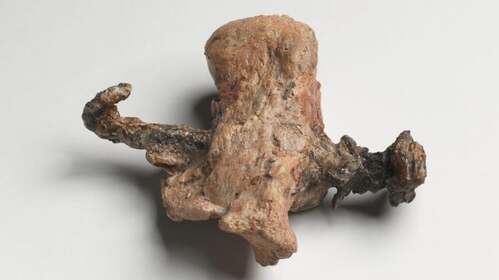
A heel bone with nail discovered in Jerusalem (known as the ossuary of Jehohanan). This has been dated back to close to 2000 years ago and is proof of Roman crucifixion by nails
Fulfillment of Prophecy
The Old Testament contains several prophecies about piercing that found fulfillment in Jesus' crucifixion:
The Gospel writers frequently reference Psalm 22 during the crucifixion narrative, showing they understood Jesus' death as fulfilling these ancient prophecies.
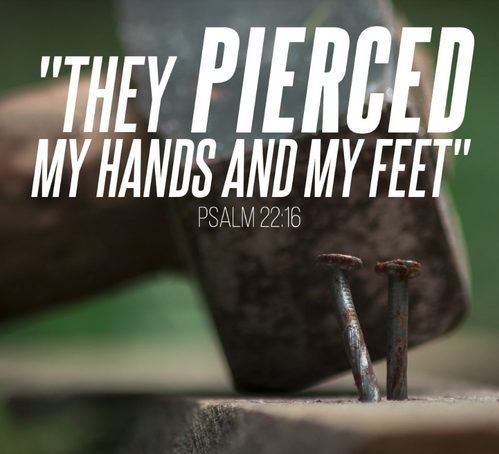
- Psalm 22:16 - "They have pierced my hands and feet" - a remarkably specific prophecy
- Isaiah 53:5 - "He was pierced for our transgressions"
- Zechariah 12:10 - "They will look on me, on him whom they have pierced"
The Gospel writers frequently reference Psalm 22 during the crucifixion narrative, showing they understood Jesus' death as fulfilling these ancient prophecies.
Problems With The Rope Theory
The argument suggesting Jesus might have been tied with ropes instead of nails has several significant flaws:
Those suggesting Jesus might have been tied with ropes rely heavily on what Scripture doesn't say in the crucifixion narrative rather than what it clearly does say in the resurrection accounts.
- It selectively ignores clear biblical testimony about nail marks
- It undermines Scripture's reliability based on speculation rather than evidence
- It contradicts the unanimous testimony of early church writers
- It dismisses the prophetic significance of piercing in the Old Testament
Those suggesting Jesus might have been tied with ropes rely heavily on what Scripture doesn't say in the crucifixion narrative rather than what it clearly does say in the resurrection accounts.
Why This Matters
This isn't just an academic debate about historical methods. The nail marks in Jesus' hands and feet carry profound theological significance:
- They confirm specific Old Testament prophecies
- They provided physical evidence of Jesus' resurrection
- They demonstrate the reality of Christ's suffering
- They remain part of His glorified body as an eternal memorial
The Beautiful Significance of Christ's Pierced Hands

The nail marks in Jesus' hands and feet tell a beautiful story of God's love and redemption plan. These wounds are eternal reminders that:
In Jesus' nail-scarred hands, we see both the price of our redemption and the depths of His love. These marks will remain visible throughout eternity as a testament to the greatest act of love the world has ever known.
As Jesus told Thomas, "Blessed are those who have not seen and yet have believed" (John 20:29). While we cannot physically see these nail marks today, Scripture assures us they exist as permanent proof of what our Savior endured to secure our salvation.
- God entered into human suffering completely
- Our salvation came at a tremendous cost
In Jesus' nail-scarred hands, we see both the price of our redemption and the depths of His love. These marks will remain visible throughout eternity as a testament to the greatest act of love the world has ever known.
As Jesus told Thomas, "Blessed are those who have not seen and yet have believed" (John 20:29). While we cannot physically see these nail marks today, Scripture assures us they exist as permanent proof of what our Savior endured to secure our salvation.
Recent
Yes, Jesus Was Pierced With Nails (And Why It Matters)
April 21st, 2025
Faithful in Suffering: Jesus' Message to the Church in Smyrna
April 10th, 2025
When Love Grows Cold: The Ephesian Warning
April 5th, 2025
The Majestic King: A Glimpse of Christ's Glory
March 26th, 2025
Devotional - The Eternal Love of Christ - Revelation 1:4-6
March 19th, 2025
Archive
2025
March
1 Comment
I believe the Romans were flexible about how they crucified and with what materials. I suspect the wood used to crucify Jesus was acacia, which would have been readily available around Jerusalem. It is also mentioned in the construction of the tabernacle. The upright could have been made from an older tree, since larger diameter would be needed. Since acacia is a hard wood it would allow reuse of the upright member. It is also notable that acacia was often used by the wandering Hebrew people got tent pegs. The cross piece could have been made of a bundle of smaller acacia branches. I estimate the weight of a 4ft bundle of one inch diameter branches would weigh about 80 pounds if constituted of 19 branches. The “nailing” could have been done with tent pegs between bundle members and through the wrists. The feet were nailed to the more massive upright, iron nails were necessary. Interestingly the total number of acacia poles would equal 20, the same number as in the tabernacle. The bark of the acacia branches had to be removed for tight packing, since the acacia has large thorns. The removed thorny bark could have easily been woven into the “crown of thorns”. The cross piece could have been reused, unless the would split due to nailing. Then the bundle would have been untied to use the intact pieces, while the broken pieces would be burned. This may explain why no pieces of “true cross” have been found from the cross piece.
nI admit this is all speculation but I like the way it mimics the tabernacle.